Understanding Age-Related Macular Degeneration (AMD)
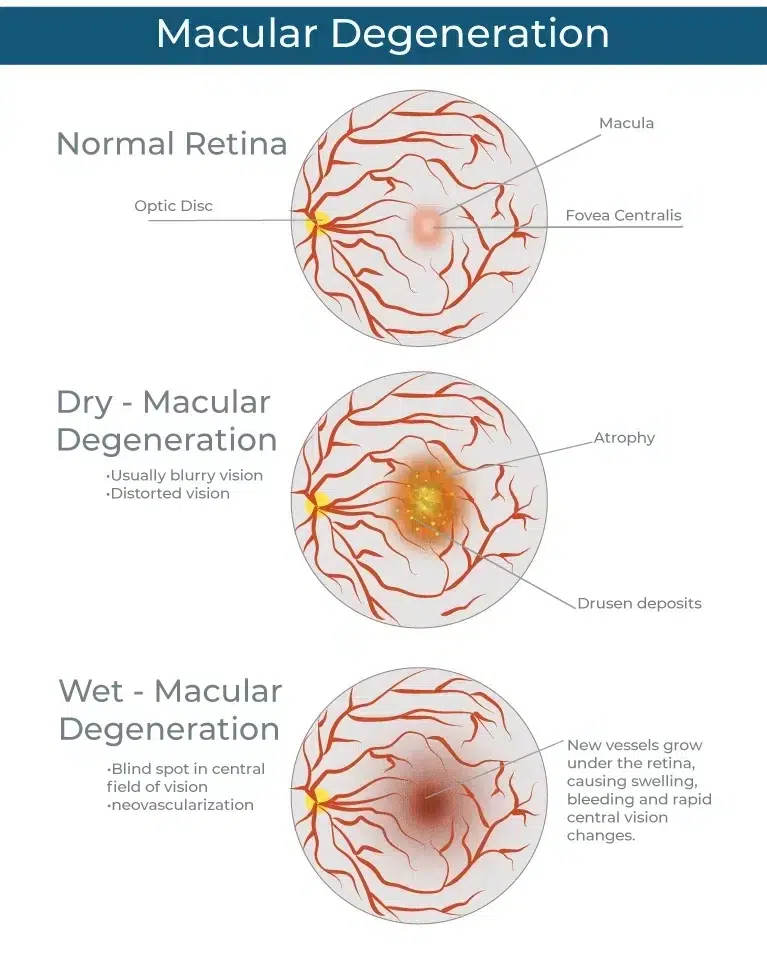
The retina lines the back of the eye and converts light into signals your brain interprets as vision. At the center of the retina sits the macula, a small but critical area responsible for sharp, straight-ahead vision. The macula allows you to read, recognize faces, drive, and see fine details clearly.
As the eyes age, the macula becomes more vulnerable to damage. Age-related macular degeneration (AMD) refers to a group of conditions that gradually damage the macula, resulting in reduced central vision. AMD develops due to a combination of aging, genetics, and environmental factors, including oxidative stress and toxins such as cigarette smoke.
Retina specialists classify AMD into two primary types: dry AMD and wet AMD. This distinction guides both monitoring and treatment.