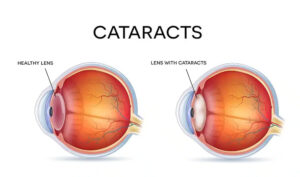
Cataracts occur when the eye’s natural lens becomes cloudy, leading to blurry or dim vision. This clouding develops gradually, often due to aging, but can also result from diabetes, trauma, or long-term UV exposure.
How do I know if I have cataracts?
Common symptoms include blurry vision, difficulty seeing at night, glare or halos around lights, faded colors, and frequent changes to prescription eyeglasses. A comprehensive eye examination is necessary for accurate diagnosis.
Surgery is typically recommended when cataracts begin to interfere with daily activities, such as reading, driving, or recognizing faces. You don’t need to wait until vision is severely impaired.
What happens during cataract surgery?
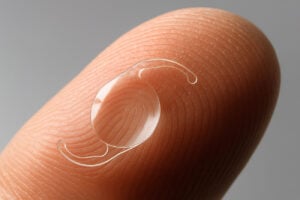
During cataract surgery, your cloudy lens is removed and replaced with a clear, artificial intraocular lens (IOL). The procedure is typically painless, lasts about 10–15 minutes per eye, and uses numbing drops instead of general anesthesia.
Is cataract surgery safe?
Yes, modern cataract surgery is one of the safest and most effective procedures, with success rates above 98%. Most patients experience clearer vision within days.
Preparing for Surgery
How should I prepare for cataract surgery?
Your surgeon will perform an eye examination, review your medications, and provide preoperative instructions. You’ll need someone to drive you home afterward, and you may be asked to use antibiotic drops before surgery.
Do I need to stop any medications?
Always inform your doctor about all medications and supplements you are taking. Some blood thinners or diabetic medications may need temporary adjustment.
Will I need both eyes done at once?
Typically, each eye is treated separately, about one to two weeks apart, allowing the first eye to heal before the second is treated.
Can I eat or drink before surgery?
Most centers ask you to refrain from eating or drinking for several hours before surgery, but your doctor will provide you with specific instructions.
Should I arrange for someone to stay with me after surgery?
Yes. Because your vision will be blurry immediately after the procedure, you’ll need a ride home and someone nearby for the first few hours.
Intraocular Lens (IOL) Options
What types of lenses are available?
There are several options:
Monofocal lenses: Focus at one distance (usually far).
Multifocal lenses: Correct for near and far vision.
Toric lenses: Correct astigmatism.
Light Adjustable Lenses (LAL): Fine-tuned after surgery for personalized clarity.
Can cataract surgery correct astigmatism?
Yes—toric and premium IOLs can correct astigmatism, reducing or even eliminating the need for glasses.
Will I still need glasses afterward?
It depends on your lens choice. Many patients with multifocal or LAL lenses enjoy minimal dependence on glasses.
How do I choose the right lens?
Your surgeon will assess your lifestyle, visual needs, and eye health to recommend the most suitable lens option for you.
During the Procedure
Is cataract surgery painful?
No. Most patients feel only mild pressure or vibration. Anesthetic drops keep you comfortable throughout the procedure.
How long does the surgery take?
The entire process—from check-in to discharge—takes about 1–2 hours, though the actual surgery lasts only 10–20 minutes.
Will I be awake during surgery?
Yes, but you’ll be relaxed. Sedatives are used to keep you calm and comfortable.
What technology is used?
Vantage Eye Center uses advanced microsurgical and laser-assisted techniques to enhance precision and safety.
What happens to the old lens?
The cloudy natural lens is gently broken apart and removed through a tiny incision using ultrasonic energy (phacoemulsification).
Is the new lens permanent?
Yes. Your new intraocular lens is designed to last a lifetime and does not require maintenance or replacement.
Recovery and Aftercare
What should I expect after surgery?
You’ll notice clearer vision within hours or days. Mild irritation or light sensitivity is typical for the first 24 to 48 hours.
How long does recovery take?
Most patients resume normal activities within 1–3 days. Complete healing may take 4 to 6 weeks.
Are there activity restrictions?
Avoid rubbing your eyes, swimming, or heavy lifting for about a week. Walking, reading, and light activity are fine.
What eye drops will I need?
You’ll use antibiotic and anti-inflammatory drops for several weeks to prevent infection and control inflammation.
When can I drive again?
You can typically drive once your vision meets legal requirements—often within 24–48 hours—but only after your surgeon’s approval.
Results and Long-Term Care
How long do results last?
Cataract surgery results are permanent. However, some patients develop posterior capsule opacification (“secondary cataract”) months or years later, which is easily treated with a simple laser procedure.
Will cataracts come back?
No. Once the cloudy lens is replaced, cataracts cannot return—but other eye conditions (like glaucoma or macular degeneration) can still affect vision over time.
Can cataract surgery prevent other eye problems?
While it doesn’t prevent other diseases, cataract surgery often allows earlier detection and treatment of conditions like diabetic retinopathy.
What if I have other eye conditions?
Many patients with glaucoma, diabetes, or retinal issues can still have cataract surgery. Your surgeon will customize the plan to your needs.
Why choose Vantage Eye Center for cataract surgery?
Vantage Eye Center combines decades of surgical experience with state-of-the-art technology and personalized care. Our board-certified ophthalmologists specialize in advanced cataract techniques—including toric, multifocal, and Light Adjustable Lenses—to help you achieve your best possible vision.
Related Posts
We’re here when you’re ready.
We make scheduling easy! Schedule online or call our office (831) 375-9876
To provide the best experiences, we use technologies like cookies to store and/or access device information. Consenting to these technologies will allow us to process data such as browsing behavior or unique IDs on this site. Not consenting or withdrawing consent, may adversely affect certain features and functions.
Functional
Always active
The technical storage or access is strictly necessary for the legitimate purpose of enabling the use of a specific service explicitly requested by the subscriber or user, or for the sole purpose of carrying out the transmission of a communication over an electronic communications network.
Preferences
The technical storage or access is necessary for the legitimate purpose of storing preferences that are not requested by the subscriber or user.
Statistics
The technical storage or access that is used exclusively for statistical purposes.The technical storage or access that is used exclusively for anonymous statistical purposes. Without a subpoena, voluntary compliance on the part of your Internet Service Provider, or additional records from a third party, information stored or retrieved for this purpose alone cannot usually be used to identify you.
Marketing
The technical storage or access is required to create user profiles to send advertising, or to track the user on a website or across several websites for similar marketing purposes.