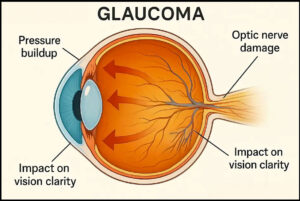
If you are wondering whether you might be at risk for glaucoma, you are not alone. Glaucomais one of the leading causes of irreversible blindness, yet many people do not realize they have it until permanent damage has already occurred. The good news is that regular eye exams and early treatment can slow or prevent vision loss for most patients.
In simple terms, glaucoma is damage to the optic nerve, often related to increased pressure inside the eye. That damage usually happens slowly and silently. Knowing your risk factors and staying on top of routine eye care is one of the most powerful ways to protect your sight.
What Is Glaucoma and How Does It Develop?
Glaucoma is a group of eye diseases that damage the optic nerve, the “cable” that carries visual information from your eye to your brain. In many cases, this damage is associated with elevatedintraocular pressure, also known as eye pressure. When fluid in the eye does not drain properly, pressure can rise and put stress on the optic nerve over time.
Two of the most common forms are:
Open-angle glaucoma
Open-angle glaucoma is the most common type. Fluid drains too slowly through the eye’s natural drainage system, so pressure builds gradually. There is usually no pain, and early vision changes are subtle. Many people do not notice a problem until their peripheral (side) vision is affected.
Angle-closure glaucoma
With angle-closure glaucoma, the drainage angle between the iris and cornea becomes blocked. Pressure can rise quickly, causing eye pain, redness, blurred vision, halos around lights, headache, or nausea. This is an eye emergency. Sudden angle-closure attacks can cause permanent vision loss if not treated right away.
Who Is Most at Risk for Glaucoma?
Anyone can develop glaucoma, but some people are more likely to be affected. You may be at risk for glaucoma if one or more of these factors apply to you:
Age: The risk increases with age, especially after the age of 60. For African Americans, risk can rise earlier, starting around age 40.
Race and ethnicity: African Americans and people of African descent are at higher risk of open-angle glaucoma. People of Asian descent may have a higher risk of angle-closure glaucoma, and people of Japanese ancestry may be more prone to normal-tension glaucoma.
Family history: Having a parent, grandparent, or sibling with glaucoma significantly raises your risk.
Medical conditions: Diabetes, high blood pressure, and heart disease are linked to a greater chance of developing glaucoma.
Medication use: Long-term use of steroid medications, such as cortisone or prednisone, can increase glaucoma risk in some people.
Previous eye problems: Prior eye injuries, retinal detachment, eye tumors, or chronic eye inflammation can affect eye pressure. High levels of nearsightedness (myopia) are also associated with increased risk.
If several of these risk factors describe you, it is crucial to keep all of your regular eye appointments and follow your doctor’s recommendations.
Glaucoma Symptoms: What to Watch For
Many people with early glaucoma notice no symptoms at all. That is why it is often called the “silent thief of sight.” Over time, however, you may develop:
Gradual loss of side (peripheral) vision
Tunnel vision in advanced stages
In angle-closure glaucoma, symptoms can appear suddenly and may include:
Severe eye pain or headache
Blurred vision or halos around lights
Red eye
Nausea or vomiting
One pupil looks larger than the other
If you ever develop sudden eye pain, vision changes, or see that one pupil looks different from the other, call your eye doctor immediately or seek emergency care.
How Eye Doctors Diagnose Glaucoma
Regular comprehensive eye exams are the best way to catch glaucoma early, especially if you are at risk for glaucoma. A thorough exam may include:
Tonometry: A quick, painless test to measure intraocular pressure.
Optic nerve evaluation:The doctor examines the optic nerve using special lenses to assess for thinning or damage.
Visual field testing: This checks your side vision for any missing or dim areas.
Imaging tests: In some cases, your doctor may use optical coherence tomography (OCT) or other imaging techniques to monitor the health of the optic nerve and nerve fiber layer over time.
These tests help your eye doctor detect glaucoma before you notice vision changes and monitor how well treatment is working.
Can Glaucoma Be Prevented?
Glaucoma cannot always be prevented, but you can lower your risk of severe vision loss.
Helpful steps include:
Keep up with routine eye exams. This is the single most crucial step, especially if you are in a higher-risk group.
Protect your eyes from injury. Wear eye protection when playing sports or using tools and machinery to protect your eyes.
Manage overall health. Work with your primary care doctor to control diabetes, high blood pressure, and other conditions that can affect eye health.
Know your family history. Please share it with your eye doctor so they can tailor your exam schedule and testing plan.
Treatment Options When You Are Diagnosed with Glaucoma
While glaucoma damage cannot be reversed, treatment can slow or stop further vision loss for most people. Treatment plans are personalized, but may include:
Prescription eye drops to lower eye pressure are often the first line of therapy—these work by reducing fluid production or improving fluid drainage.
Laser procedures, such as Selective Laser Trabeculoplasty (SLT), can enhance the eye’s drainage system and reduce pressure. Many of these are quick outpatient procedures.
Micro-invasive glaucoma surgery (MIGS) and other surgical options are used when drops and lasers are not enough. These procedures help create new drainage pathways or support the existing ones to keep pressure at a safer level.
Your glaucoma specialist will select the least invasive treatment that can effectively protect your optic nerve and preserve your vision.
Protecting Your Sight Starts With One Exam
If you think you may be at risk for glaucoma, or if it has been more than a year since your last eye exam, this is the right time to act. A comprehensive visit with an experienced eye doctor can identify early changes, explain your personal risk factors, and create a plan to safeguard your vision for the long term.
To provide the best experiences, we use technologies like cookies to store and/or access device information. Consenting to these technologies will allow us to process data such as browsing behavior or unique IDs on this site. Not consenting or withdrawing consent, may adversely affect certain features and functions.
Functional
Always active
The technical storage or access is strictly necessary for the legitimate purpose of enabling the use of a specific service explicitly requested by the subscriber or user, or for the sole purpose of carrying out the transmission of a communication over an electronic communications network.
Preferences
The technical storage or access is necessary for the legitimate purpose of storing preferences that are not requested by the subscriber or user.
Statistics
The technical storage or access that is used exclusively for statistical purposes.The technical storage or access that is used exclusively for anonymous statistical purposes. Without a subpoena, voluntary compliance on the part of your Internet Service Provider, or additional records from a third party, information stored or retrieved for this purpose alone cannot usually be used to identify you.
Marketing
The technical storage or access is required to create user profiles to send advertising, or to track the user on a website or across several websites for similar marketing purposes.