Eye Allergy Treatment for Pet Owners: Relief for Itchy, Watery Eyes
Your cat curls up beside you. Your dog leans in for a heroic face lick. Ten minutes later, your eyes itch, water, and turn red enough to make it look like you just watched the saddest movie ever made.
Eye allergy treatment for pet owners can help calm itchy, watery eyes without making you avoid the dog, cat, or tiny household dictator you love. For pet owners in Monterey, Salinas, and nearby Central Coast communities, the solution usually does not involve loving your pet from across the room. The right combination of allergen control, eye drops, and professional care can help you feel more comfortable while keeping your favorite animal close.
If symptoms keep returning or interfere with your vision, contact lens use, work, or sleep, schedule a comprehensive eye exam at Vantage Eye Center.
Why Do Pets Cause Allergies?
Pet-related eye allergies happen when your immune system overreacts to proteins associated with an animal.
These allergens may come from:
Dander, or flakes of skin
Saliva
Urine
Material carried on the animal’s coat
Dust, pollen, or mold collected in the fur
When these particles reach the surface of your eyes, your immune system releases histamine and other chemicals. That response can inflame the conjunctiva, the clear tissue that covers the white part of your eye and the inside of your eyelids.
Your pet is not plotting against you. Your immune system is simply being far too dramatic about the situation.
What Pet-Related Eye Allergies Feel Like
Intense itching often provides the strongest clue that allergies may be causing your symptoms.
Common signs include:
Itchy eyes
Clear, watery tearing
Redness
Burning or stinging
Puffy eyelids
A gritty or sandy sensation
Clear or stringy discharge
Sneezing or nasal congestion
An itchy nose or throat
Symptoms may begin after petting an animal, cleaning a litter box, brushing a coat, or sitting on upholstered furniture where a pet spends time.
They can also continue long after the pet leaves the room. Allergens may collect in carpeting, bedding, curtains, clothing, furniture, and other soft surfaces.
Why “Hypoallergenic” Pets Can Still Cause Symptoms
No dog or cat is completely hypoallergenic.
Some breeds shed less hair, but pet allergies usually involve proteins found in dander, saliva, or urine. A low-shedding dog can still release allergens into the home.
Fur may also carry outdoor pollen, dust, and mold inside. This can make symptoms worse during certain seasons, especially if your pet enjoys rolling through grass as they have just invented it.
The amount of hair on your couch does not always match the amount of allergen affecting your eyes.
Eye Allergy Treatment for Pet Owners Starts at Home
Reducing exposure can make medications more effective and help prevent frequent flare-ups.
You do not need to turn your home into a sterile laboratory. A few consistent habits can make a meaningful difference.
Wash your hands after touching your pet
Pet allergens can remain on your hands after playing, feeding, grooming, or cuddling.
Wash with soap and water before:
Touching your face
Rubbing your eyes
Applying eye drops
Handling contact lenses
Going to bed
You may also want to change your shirt after prolonged play or grooming, especially before lying on your pillow.
Avoid rubbing your eyes
Rubbing may feel satisfying for a few seconds, but it can increase inflammation and spread allergens across your eyelids.
It may also irritate the cornea or worsen swelling around the eyes.
Instead, close your eyes and apply a clean, cool compress for several minutes.
Use a cool compress
A cool washcloth placed over closed eyes may reduce itching, puffiness, and general discomfort.
Use a clean cloth each time. Avoid sharing washcloths or towels with other household members, particularly when you are unsure whether the redness is due to allergies or an infection.
Rinse allergens away with artificial tears
Lubricating eye drops can rinse particles from the eye surface while adding moisture.
Preservative-free artificial tears may feel more comfortable if you use drops frequently or already have sensitive, dry eyes.
Artificial tears may provide temporary relief, but they do not stop the allergic reaction itself.
Give Your Bedroom an Allergen Timeout
Your bedroom can provide several hours of reduced exposure each night.
Keep pets off:
The bed
Pillows
Bedroom furniture
Clean laundry
Blankets used near your face
Wash sheets, pillowcases, and pet bedding regularly, following the manufacturer’s instructions.
Your dog may disagree with this policy. Your cat may simply ignore it. Consistency still matters.
Use a HEPA Air Purifier in High-Use Rooms
A properly sized HEPA air purifier may help reduce airborne particles in the rooms where you spend the most time.
Many pet owners begin with the bedroom. Others use a purifier in the living room or home office.
Check the purifier’s recommended room size and replace filters according to the manufacturer’s schedule. A purifier with an overdue filter eventually becomes an expensive piece of furniture with a glowing button.
Clean the Surfaces that Collect Pet Allergens
Pet allergens accumulate on soft surfaces and in household dust.
A regular cleaning routine may include:
Vacuuming carpets and upholstered furniture
Using a vacuum with a HEPA filter
Damp-dusting hard surfaces
Washing removable furniture covers
Cleaning pet beds and blankets
Reducing clutter that collects dust
Mopping hard floors
If cleaning triggers symptoms, ask a less-sensitive household member to handle the dustiest jobs. Wearing glasses and a mask may also reduce exposure while you clean.
Move Grooming Away from Your Face
Have another household member brush the pet outdoors when possible.
Ask your veterinarian how often your pet should be bathed. Overbathing can irritate an animal’s skin, so follow professional guidance rather than declaring war on every speck of dander.
After grooming:
Wash your hands
Change your shirt
Avoid touching your eyes
Clean the grooming area
Keep brushes away from bedrooms and pillows
Try to redirect enthusiastic pet kisses away from your eyes, nose, and mouth. Saliva can contain allergenic proteins, even when delivered with great affection.
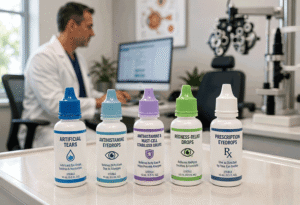
Which Eye Drops Help with Pet Allergies?
Eye allergy treatment for pet owners often works best as a layered plan. Environmental changes reduce exposure, while the right drops help control symptoms.
They can help with mild irritation, burning, and grittiness. They do not directly block histamine or prevent an allergic response.
Antihistamine Eye Drops
Antihistamine eye drops help block histamine, one of the chemicals responsible for itching and redness.
Some products work quickly but may not provide long-lasting control. Ask your eye doctor how often to use them and whether they fit your symptoms.
Antihistamine and Mast-Cell Stabilizer Drops
Some over-the-counter and prescription drops combine an antihistamine with a mast-cell stabilizer.
The antihistamine helps reduce active itching. The mast-cell stabilizer helps prevent the allergic reaction from building again.
These drops may work well for recurring or seasonal eye allergies when used as directed.
Redness-Relief Drops
Drops marketed mainly to “get the red out” shrink blood vessels on the surface of the eye.
They may temporarily reduce redness, but they do not treat the underlying allergy. Frequent use of some redness-relief products can cause rebound redness.
Do not rely on them as a long-term treatment for eye allergies.
Prescription Eye Drops
Persistent symptoms may require prescription allergy medication or another short-term treatment.
An eye doctor may recommend stronger antihistamine drops, mast-cell stabilizers, anti-inflammatory medication, or treatment for an overlapping condition.
Never reuse an old prescription or borrow someone else’s eye drops.
Steroid eye drops require medical supervision because improper use can raise eye pressure, increase the risk of infection, or contribute to other complications.
Can Oral Antihistamines Make Your Eyes Feel Drier?
Oral allergy medicine may improve sneezing, congestion, and other nasal symptoms.
However, some oral antihistamines can reduce tear production. This may leave your eyes feeling dry, gritty, tired, or more irritated.
You may have both eye allergies and dry eye at the same time. In that situation, the medication calming your nose may make the eye surface feel worse.
If burning, grittiness, fluctuating blur, or watering continues, learn more aboutdry eye treatment at Vantage Eye Center.
Should you Wear Contact Lenses During an Allergy Flare?
Contact lenses can trap allergens against the surface of the eye.
Remove your lenses when your eyes become:
Red
Itchy
Swollen
Painful
Unusually watery
Sensitive to light
Wear glasses until your eyes feel comfortable again.
Do not apply medicated allergy drops while wearing contacts unless your eye doctor and the product instructions confirm it is safe.
Replace disposable lenses and clean reusable lenses as directed by your doctor. You may also need to replace the lens case after a significant flare.
Contact lens wearers should seek prompt care for eye pain, light sensitivity, sudden blurry vision, or severe redness. These symptoms can signal a corneal problem rather than a routine allergy.
Is it an Eye Allergy, Dry Eye, or Pink Eye?
Allergies, dry eye, and infectious conjunctivitis can all cause redness and watering. The details help separate them.
Eye allergies commonly cause:
Strong itching
Symptoms in both eyes
Clear, watery discharge
Puffy eyelids
Symptoms linked to a trigger
Dry eye commonly causes:
Burning
Grittiness
Fluctuating blurry vision
Tired eyes
Reflex watering
Discomfort that worsens with screens or wind
Infectious pink eye may cause:
Symptoms that begin in one eye
Thick discharge
Eyelid crusting
Recent illness or exposure
Increasing redness
Vantage Eye Center’s guide toeye allergies versus pink eye explains additional differences between the two conditions.
Because the symptoms overlap, avoid diagnosing yourself solely on the basis of redness. A comprehensive eye exam can identify the cause and help you avoid treatment that may make the problem worse.
When Should You Schedule an Eye Exam?
Schedule an exam when symptoms:
Keep returning
Last despite home treatment
Interfere with contact lenses
Affect reading, driving, or work
Disturb your sleep
Causes frequent blurry vision
Become more severe
Do not clearly match an allergy pattern
An eye doctor can examine the eye surface, eyelids, tear film, cornea, and other structures. The exam can also identify dry eye, blepharitis, infection, contact lens irritation, or another condition that may be contributing to your discomfort.
These symptoms may point to infection, corneal inflammation, injury, or another eye condition that needs more than allergy treatment.
Call 911 or seek emergency medical care for severe breathing difficulty, facial swelling, faintness, or another sign of a serious allergic reaction.
Enjoy All the Cuddles Without Surrendering your Comfort
Eye allergy treatment for pet owners should help you spend time with your pet without having to accept constant itching, redness, or watering as part of the arrangement.
Vantage Eye Center can determine whether allergies, dry eye, infection, contact lens irritation, or another eye condition is causing your symptoms. With locations in Monterey and Salinas, personalized eye care is available close to home across Monterey County.
Yes. Pet allergens can cause itchy, red, watery, or burning eyes even when nasal symptoms remain mild. Some people also experience sneezing, congestion, coughing, skin irritation, or asthma symptoms.
The best plan usually combines reduced allergen exposure with symptom relief. Wash your hands after touching pets, keep animals out of the bedroom, avoid rubbing your eyes, use cool compresses, and ask an eye doctor which eye drops fit your symptoms.
No dog or cat is completely hypoallergenic. Low-shedding breeds may leave less hair in the home, but allergenic proteins can still come from dander, saliva, and urine.
Pet-related eye allergies can temporarily blur vision when tearing, swelling, or an unstable tear film affects the eye surface. Persistent, sudden, or significant blurry vision needs an eye exam.
Yes. Some oral antihistamines reduce tear production and can increase dryness, burning, or grittiness. Ask your eye doctor or allergist about alternatives if your nasal symptoms improve but your eyes feel worse.
Yes. Contact lenses can trap allergens, increasing irritation. Remove them during a flare and wear glasses until your eyes feel comfortable again.
Allergies usually cause intense itching in both eyes with clear, watery discharge. Infectious pink eye may begin in one eye and can cause thicker discharge, crusting, or symptoms related to an illness.
See an eye doctor when symptoms affect your eyes, vision, contact lens comfort, or eye surface. An allergist can identify broader triggers and discuss allergy testing or immunotherapy. Some patients benefit from both.
Seek prompt care for eye pain, sudden vision changes, light sensitivity, severe redness, marked swelling, thick discharge, an injury, or symptoms related to contact lens use.
Vantage Eye Center provides comprehensive eye exams in Monterey and Salinas, California. An eye doctor can determine whether your symptoms are due to allergies, dry eye, an infection, contact lenses, or another condition.
Related Posts
We’re here when you’re ready.
We make scheduling easy! Schedule online or call our office (831) 375-9876
To provide the best experiences, we use technologies like cookies to store and/or access device information. Consenting to these technologies will allow us to process data such as browsing behavior or unique IDs on this site. Not consenting or withdrawing consent, may adversely affect certain features and functions.
Functional
Always active
The technical storage or access is strictly necessary for the legitimate purpose of enabling the use of a specific service explicitly requested by the subscriber or user, or for the sole purpose of carrying out the transmission of a communication over an electronic communications network.
Preferences
The technical storage or access is necessary for the legitimate purpose of storing preferences that are not requested by the subscriber or user.
Statistics
The technical storage or access that is used exclusively for statistical purposes.The technical storage or access that is used exclusively for anonymous statistical purposes. Without a subpoena, voluntary compliance on the part of your Internet Service Provider, or additional records from a third party, information stored or retrieved for this purpose alone cannot usually be used to identify you.
Marketing
The technical storage or access is required to create user profiles to send advertising, or to track the user on a website or across several websites for similar marketing purposes.