Retinal Detachment Treatments: How Vantage Eye Center Protects Your Vision
Retinal detachment treatments are urgent procedures that repair tears or breaks in the retina, allowing it to be reattached and preserving vision. In most cases, this means sealing retinal tears with laser or freezing treatment and using surgeries such as pneumatic retinopexy, scleral buckle, or vitrectomy to reposition the retina. Without timely treatment, retinal detachment can lead to permanent vision loss, making fast diagnosis and care crucial.
At Vantage Eye Center, our retina specialists in Monterey and Salinas regularly evaluate floaters, flashes, and sudden changes in vision. This guide provides an overview of what retinal detachment is, the most common treatments for retinal detachment, and how our team supports you from the initial emergency eye care appointment through recovery.
What Is Retinal Detachment?
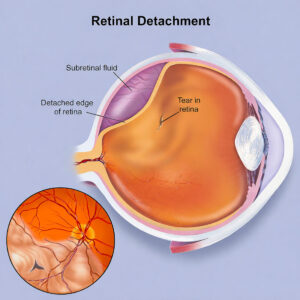
The retina is a thin layer of light-sensing tissue that lines the back of the eye and sends visual information to the brain. Retinal detachment occurs when the tissue separates from the nourishing layers underneath it. When that connection is lost, the retina can no longer work properly, and vision becomes blurred, shadowed, or completely dark if the macula is involved.
Most retinal detachments happen because of a tear in the retina that lets the clear vitreous gel, which fills the center of the eye, seep behind the retina and lift it off. Others are caused by scar tissue that pulls on the retina, or by fluid that accumulates under the retina due to inflammation, tumors, or other diseases.
When Retinal Detachment Is an Emergency
Retinal detachment is almost always an emergency, not a “wait and see” situation. The sooner the retina is repaired, the better the chance of protecting vision.
A gray curtain or shadow moving across your vision
Sudden loss of side vision or a dark area you cannot see through
Even if symptoms seem to fade, you should still be examined quickly. A dilated retina exam lets your doctor check for tears, bleeding, or detachment and decide whether immediate treatment is needed.
Laser and Freezing Treatments for Retinal Tears
Sometimes the retina is torn but not yet detached. Treating these tears early can prevent a full retinal detachment.
Laser photocoagulation
A focused laser creates tiny burns around a retinal tear. These spots form a scar that “welds” the retina to the underlying tissue, blocking fluid from slipping underneath.
Cryotherapy (freezing treatment)
In some cases, especially when a tear is more peripheral or hard to reach with a laser, a freezing probe is applied to the outside of the eye. The cold energy passes through the wall of the eye, creating a similar scar that seals the break.
Both procedures are usually done in the office with numbing drops. You may notice some flashing lights during treatment and mild soreness afterward, but most people return to normal activities quickly.
Surgical Retinal Detachment Treatments
When the retina has already detached, surgery is required. Your retina specialist at Vantage Eye Center will recommend one or more of these retinal detachment treatments based on the pattern of detachment and your individual needs.
Pneumatic retinopexy
A small gas bubble is injected into the vitreous cavity.
The bubble floats upward and gently presses the retina back into its proper position.
Laser or cryotherapy is then used to seal the tear.
You will need to maintain a specific head position so the bubble stays over the tear, sometimes for several days. As the gas slowly absorbs, the scar holds the retina in place.
Scleral buckle surgery
A soft silicone band, called a scleral buckle, is placed around the outside of the eye.
This band indents the wall of the eye slightly, bringing it closer to the detached retina.
Tears are sealed with laser or cryotherapy, and fluid under the retina is drained when needed.
The buckle stays in place permanently and is usually not visible. This approach is beneficial for certain types of rhegmatogenous retinal detachments, including those involving multiple tears.
Vitrectomy surgery
Tiny openings are created in the white part of the eye.
The surgeon removes the vitreous gel, which may be pulling on the retina or clouded with blood.
The retina is reattached, tears are treated with laser, and the eye is filled with a gas bubble or, in some cases, silicone oil.
Vitrectomy is commonly used for more complex detachments, including those related to diabetic eye disease or scar tissue.
Recovery After Retinal Detachment Surgery
Recovery depends on which retinal detachment treatments are used, but most patients can expect:
An outpatient procedure with numbing and light sedation
Some scratchiness, light sensitivity, or blurred vision in the first days
Eye drops to prevent infection and control inflammation
Restrictions on heavy lifting, flying, or face-up sleeping if a gas bubble is present
Vision often improves gradually over weeks to months as the eye heals. If the macula has been detached for a long time, some vision loss may remain; however, treating it early gives the best chance of a strong recovery.
How Vantage Eye Center Supports You
Retinal detachment can feel frightening, especially when you experience sudden vision changes. At Vantage Eye Center, our retina specialists utilize modern imaging, advanced laser systems, and surgical techniques that adhere to current guidelines from reputable organizations, including the National Eye Institute and the American Academy of Ophthalmology.
We also coordinate closely with your primary eye doctor and provide clear instructions for positioning, follow-up, and long-term monitoring. Our goal is to help you understand every step of your care, protect as much of your vision as possible, and support you as you return to your daily life.
If you are concerned about symptoms of retinal detachment, please contact us immediately to schedule an emergency eye care appointment or to learn more about our retina services at Vantage Eye Center.
FAQ: Retinal Detachment Treatments
How do I know if I need retinal detachment treatment right away? Any sudden shower of floaters, repeated flashes of light, or a curtain or shadow moving across your vision should be treated as an emergency. Call Vantage Eye Center immediately so a retina specialist can examine you the same day.
Are retinal detachment treatments painful? Most procedures use numbing drops and light sedation, so you should feel pressure rather than pain. Mild soreness or scratchiness afterward is common and usually managed with over-the-counter medication and eye drops.
Will my vision go back to normal after surgery? Many people regain good functional vision, especially when the detachment is treated promptly, and the macula is not involved for an extended period. If the central retina remains detached for an extended period, some degree of permanent vision loss is possible.
How long will I need to position after a gas bubble procedure? Your surgeon will provide precise positioning instructions that may last from several days to a couple of weeks, depending on the size and location of your detachment, as well as the type of gas used.
Can retinal detachment happen again? Yes, a small percentage of patients can have another detachment, either in the same eye or in the other eye. Regular follow-up with your retina specialist helps detect new changes early, allowing for prompt treatment.
Is there anything I can do to prevent retinal detachment? You cannot prevent every detachment, but protecting your eyes from trauma, managing conditions such as diabetes, and seeking prompt care for new floaters, flashes, or changes in vision can lower your risk of severe vision loss.
Get Evaluated Today
Retinal detachment treatments are time sensitive, but they are also highly effective when performed promptly by an experienced retina specialist. Whether you need laser treatment for a small retinal tear, pneumatic retinopexy, scleral buckle surgery, or vitrectomy, the team at Vantage Eye Center will guide you through every step with clear explanations and compassionate care.
If you are noticing new floaters, flashes, or shadows in your vision, do not wait. Contact Vantage Eye Center today to request an emergency eye care appointment and learn more about our retina services so you can protect your sight for the long term.
Related Posts
We’re here when you’re ready.
We make scheduling easy! Schedule online or call our office (831) 375-9876