Traditional Glaucoma Surgery: When Advanced Devices Are Needed to Protect Vision
Traditional glaucoma surgery is sometimes necessary when eye pressure cannot be controlled with medications, laser therapy, or minimally invasive glaucoma surgery (MIGS). For patients with moderate to advanced glaucoma, these time-tested surgical options can play a critical role in preserving vision and slowing disease progression.
If you have been advised that MIGS may not be sufficient to manage your eye pressure, this guide explains when traditional glaucoma surgery is recommended, the devices commonly used, and what to expect before and after the procedure.
When Traditional Glaucoma Surgery Is Recommended
Glaucoma damages the optic nerve when pressure inside the eye remains too high for too long. While medications, laser treatments, and MIGS are often effective in early or moderate disease, they may not provide enough pressure reduction in more advanced cases.
Traditional glaucoma surgery is typically considered when:
Prior MIGS procedures have not achieved the targeted pressure
Yourglaucoma surgery specialist evaluates the structure of your eye, your pressure goals, and the severity of your disease to determine the safest and most effective surgical approach.
Types of Traditional Glaucoma Surgery
Tube Shunt Surgery (Glaucoma Drainage Devices)
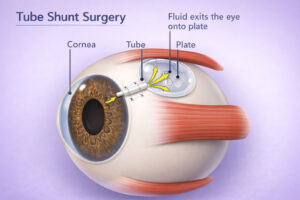
Tube shunt surgery, also known as glaucoma shunt surgery, utilizes a small, implanted device to help drain fluid from inside the eye and lower intraocular pressure. These devices are often recommended for patients with advanced glaucoma or eyes that have not responded well to other treatments.
Two of the most commonly used devices are:
Ahmed Valve The Ahmed valve includes a pressure-sensitive mechanism that helps regulate fluid flow immediately after surgery. This design may reduce the risk of early postoperative pressure drops.
Baerveldt Tube Shunt The Baerveldt shunt device does not contain a valve. Instead, the flow is carefully controlled by the surgeon during the healing process. Over time, it can achieve very low and stable eye pressure, making it a strong option for complex or advanced cases.
Both devices consist of a tiny tube placed inside the eye and a plate positioned beneath the eyelid, where the fluid drains and is naturally absorbed by the body.
Trabeculectomy Surgery
Trabeculectomy surgery is one of the most established procedures for treating glaucoma. During surgery, the surgeon creates a small drainage opening in the eye wall, allowing fluid to exit more easily. The fluid collects under the eyelid in a small reservoir called a bleb, lowering eye pressure.
Trabeculectomy can be highly effective, but it requires careful postoperative monitoring to ensure proper healing and effective pressure control. It is often recommended for patients who need significant pressure reduction.
What Is Tube Shunt Eye Surgery?
Tube shunt eye surgery is a procedure that reroutes excess eye fluid through a tiny tube connected to a drainage plate. By providing an alternate pathway for fluid to leave the eye, pressure on the optic nerve is reduced.
This approach is frequently chosen for:
Advanced glaucoma
Eyes with previous surgery
Inflammatory or secondary glaucoma
Patients who need lower target pressures
How Long Does Tube Shunt Surgery Take?
Most tube shunt surgery procedures take approximately 60 to 90 minutes, depending on the complexity of the case. The surgery is typically performed on an outpatient basis, meaning patients are discharged home on the same day.
What to Expect After Trabeculectomy Surgery
Recovery after trabeculectomy surgery requires close follow-up to ensure proper healing and pressure control.
Most patients can expect:
Temporary blurred vision
Eye drops for several weeks to support healing
Activity restrictions during early recovery
Frequent follow-up visits, especially in the first few months
Your surgeon may adjust medications or perform minor in-office procedures to fine-tune eye pressure during the healing phase. This careful monitoring is essential to long-term success.
Recovery After Traditional Glaucoma Surgery
Whether you undergo tube shunt surgery or trabeculectomy, recovery is gradual. Many patients notice pressure improvement within weeks, but complete stabilization can take several months to occur.
During recovery, your care team will:
Monitor eye pressure closely
Adjust medications as needed
Watch for inflammation or scarring
Guide you on activity and eye care
Traditional glaucoma surgery does not cure glaucoma, but it can significantly slow progression and help protect remaining vision.
Why Experience Matters in Glaucoma Surgery
Advanced glaucoma surgery requires precision, planning, and long-term follow-up. At Vantage Eye Center, patients are cared for by experiencedglaucoma surgery specialists who tailor treatment plans to each individual’s unique eye needs.
FAQ: Traditional Glaucoma Surgery
What is tube shunt eye surgery? Tube shunt surgery utilizes a small, implanted device to drain excess fluid from the eye and lower pressure when other treatments are insufficient.
How long does tube shunt surgery take? Most procedures take about 60–90 minutes and are performed as outpatient surgery.
What is trabeculectomy surgery? Trabeculectomy is a surgical procedure that creates a new drainage pathway for eye fluid, allowing pressure to decrease and protecting the optic nerve.
What should I expect after trabeculectomy surgery? Patients can expect temporary vision changes, frequent follow-up visits, and the use of prescription eye drops while the eye heals.
Is traditional glaucoma surgery permanent? These surgeries provide long-term pressure control; however, ongoing monitoring is necessary. Some patients may still need medications.
How do I know which surgery is right for me? Your glaucoma specialist will recommend the option that best meets your pressure goals, eye anatomy, and disease severity.
Talk With a Glaucoma Surgery Specialist
If glaucoma is progressing despite medications or MIGS, traditional glaucoma surgery may be the most effective way to protect your vision. A comprehensive evaluation can help determine the safest next step for your eyes.
Request an appointment with a glaucoma surgery specialist at Vantage Eye Center to discuss your options and create a personalized treatment plan.
Related Posts
We’re here when you’re ready.
We make scheduling easy! Schedule online or call our office (831) 375-9876
To provide the best experiences, we use technologies like cookies to store and/or access device information. Consenting to these technologies will allow us to process data such as browsing behavior or unique IDs on this site. Not consenting or withdrawing consent, may adversely affect certain features and functions.
Functional
Always active
The technical storage or access is strictly necessary for the legitimate purpose of enabling the use of a specific service explicitly requested by the subscriber or user, or for the sole purpose of carrying out the transmission of a communication over an electronic communications network.
Preferences
The technical storage or access is necessary for the legitimate purpose of storing preferences that are not requested by the subscriber or user.
Statistics
The technical storage or access that is used exclusively for statistical purposes.The technical storage or access that is used exclusively for anonymous statistical purposes. Without a subpoena, voluntary compliance on the part of your Internet Service Provider, or additional records from a third party, information stored or retrieved for this purpose alone cannot usually be used to identify you.
Marketing
The technical storage or access is required to create user profiles to send advertising, or to track the user on a website or across several websites for similar marketing purposes.