
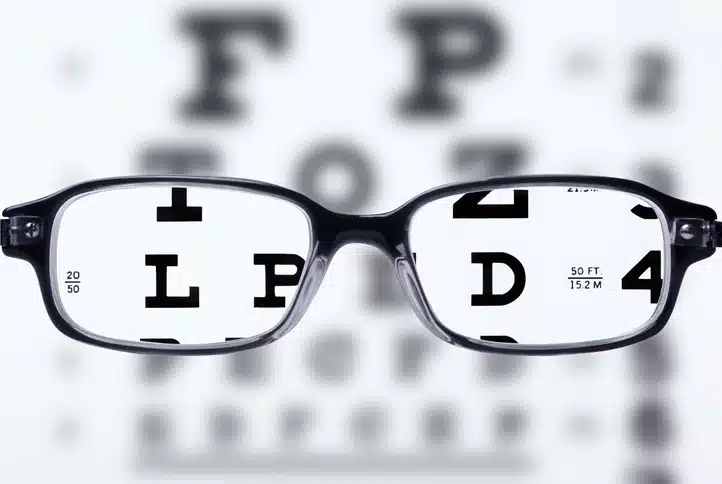
At Vantage Eye Center, patients often ask Dr. Jon Page whether LASIK can fix their astigmatism. The simple answer is YES! Modern LASIK technology can effectively correct astigmatism in the majority of cases. In this blog, we’ll explain what astigmatism is, how LASIK addresses it, who is a good candidate, and the benefits of LASIK eye surgery.
What is Astigmatism?
Astigmatism is a prevalent vision problem that causes blurry or distorted sight. It occurs when the eye’s curvature isn’t perfectly round. Instead of your cornea being spherical like a basketball, in astigmatism, it’s shaped more like a football (or “rugby ball”). Because of this uneven curve, light entering the eye doesn’t focus on a single point on the retina the way it should. Instead, light may focus on multiple points or in front of/behind the retina, leading to fuzzy, distorted vision at both near and far distances.
Symptoms of Astigmatism
Common symptoms include blurred vision, eyestrain, headaches, and trouble seeing well at night (halos or glare). Astigmatism often occurs alongside nearsightedness (myopia) or farsightedness (hyperopia), which can complicate your prescription. However, LASIK treats all of these refractive errors with a single, customized procedure.
Astigmatism Myths
In the past, many believed that astigmatism made them ineligible for LASIK. However, that is a myth because today’s advanced lasers can correct astigmatism with great precision, even in cases of higher amounts. One patient even reported that after “decades of being told I’d never be a LASIK candidate,” a new laser system was able to treat their significant astigmatism (up to 5 diopters) with excellent results. In fact, LASIK has been successfully treating astigmatism since the late 1990s, and it’s now a routine part of laser vision correction. The key is that your astigmatism must be the regular kind (the typical football-shaped cornea) – irregular astigmatism caused by conditions like keratoconus may require other treatments. However, for the most common type of astigmatism, LASIK is a highly effective solution.
How LASIK Corrects Astigmatism
LASIK (Laser-Assisted In Situ Keratomileusis) is a laser eye surgery that reshapes the cornea (the clear front surface of your eye) to fix refractive errors like astigmatism. Rather than using glasses or contact lenses to compensate for the cornea’s shape, LASIK corrects the shape of the cornea. In astigmatism, the laser targets the specific steep or flat areas of your cornea, smoothing out the oval “football” shape into a rounder “basketball” dome. This allows incoming light rays to focus at one point on the retina, providing clear vision. As Mayo Clinic explains, glasses can correct vision by refocusing light, but reshaping the cornea itself (as LASIK does) addresses the root cause of astigmatism.
If you imagine your cornea’s shape is causing funhouse-mirror vision, LASIK works by polishing the mirror so that it’s evenly curved. After LASIK corrects the uneven curvature, light can enter your eye and focus properly, eliminating the blur and distortion caused by astigmatism. This is why LASIK often yields such crisp outcomes; it corrects the optical imperfection on the eye’s surface. According to eye surgeons, LASIK for astigmatism is essentially permanent: once the cornea has been reshaped to the correct curvature, the astigmatism is “cured” and typically does not come back. (However, do note that new vision changes can occur later in life due to aging or other factors, but your astigmatism correction is lasting.)
Are You a Good Candidate for LASIK with Astigmatism?
LASIK was designed to correct astigmatism, as well as other refractive errors. You may be a great candidate if:
1. Your Astigmatism Is Within a Treatable Range
Generally, up to about 5 or 6 diopters of astigmatism can be corrected with LASIK. Most people’s astigmatism is below this level. Very high astigmatism (or uncommon types, such as irregular astigmatism) may require alternative techniques, but Dr. Page will assess this.
2. Stable prescription
Your eyeglass/contact lens prescription (astigmatism and any nearsighted/farsighted component) should be stable for at least a year. Recent significant changes in astigmatism may mean you should wait.
3. Healthy corneas and eyes
Your cornea must be thick enough and generally healthy. Conditions like keratoconus (a condition characterized by a thinning, cone-shaped cornea) or severe dry eye may disqualify a person for LASIK. Dr. Page will thoroughly check for any issues. Overall eye health (including the absence of uncontrolled glaucoma and retinal problems) and general health (such as certain autoimmune diseases) are also factors to consider.
4. Age 18+ and adult vision
You must be an adult (LASIK is FDA-approved for individuals 18 years of age and older). Many surgeons prefer patients in their mid-20s or older simply because, by then, prescriptions tend to have stabilized. There’s technically no upper age cutoff, but if you’re over 40, we’ll also discuss lens changes, such as presbyopia.
During your consultation, Dr. Page will personally examine your eyes and discuss your vision goals with you. If LASIK isn’t the best option for you, don’t worry – other treatments, such as RLE or ASA, may be great alternatives. Our priority is finding the safest and most effective path to clear vision for your eyes.
Benefits of LASIK for Astigmatism
Astigmatism is no barrier to laser eye surgery in today’s world of advanced refractive technology. Here’s why so many patients choose LASIK at Vantage Eye Center!
Clear Vision at Near & Far Distances
By precisely reshaping your cornea, LASIK directly addresses the cause of blurry vision associated with astigmatism. Patients often achieve sharper vision for both near and distant objects dramatically after surgery, without the distortion they experienced before. Many achieve 20/20 vision or better. (In one study, LASIK for mild-moderate astigmatism was found “effective and predictable” with high success rates.
Permanent Results
Unlike glasses or contacts that only work while you use them, LASIK’s changes to your cornea are intended to be permanent. The astigmatism correction does not “wear off.” Most patients enjoy stable, long-term vision improvement – studies show outcomes lasting at least 10 years and counting. You won’t need new prescriptions each year for astigmatism anymore.
Freedom from Glasses & Contacts
After LASIK, you should be much less dependent on corrective lenses (often completely free of them!). No more special toric contacts or switching between pairs of glasses. This is a huge lifestyle boost – whether you’re driving, playing sports, or simply waking up to see your alarm clock, you’ll enjoy the convenience of clear, natural vision.
Quick Recovery & Minimal Pain
LASIK is a minimally invasive procedure, and patients typically experience minimal discomfort or pain after the procedure. The recovery is usually fast – most people return to normal activities within a day or two. You’ll use eye drops for a short while, but often within a few weeks, your eyes will feel normal. The risk of significant complications is low. Dry eye and night glare can occur temporarily, but for the vast majority, these side effects are mild and resolve over time. Patient satisfaction with LASIK is exceptionally high, often exceeding 95%.
Achieve Clear Vision with Dr. Jon Page
If you’re tired of astigmatism blur and the hassle of glasses or contacts, schedule a LASIK consultation with Dr. Page. We’ll answer all your questions and guide you through the process from start to finish. Clear vision could be just a quick procedure away. Life without astigmatism is not possible, and for many, it’s a life-changing freedom!